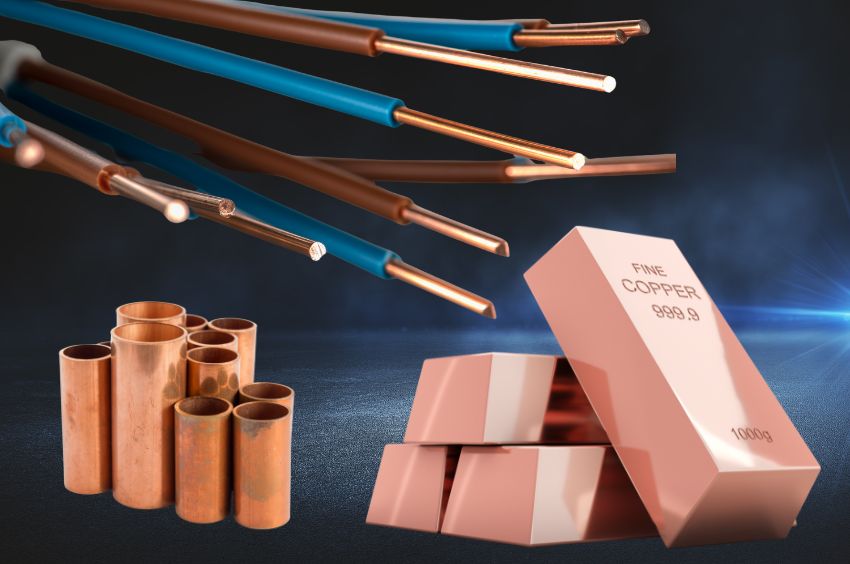
Copper prices are moving fast. Faster than most people expected.
In the last one year alone, prices are up around 43%. That kind of move doesn’t happen often. Especially when you look back. Since 2012, copper prices had gone up roughly 55% in total. Now almost the same jump happened in just one year.
Naturally, the market is reacting.
Miners Are Enjoying the Rally
For copper producers, this is good news. Higher prices mean better realizations. Margins improve. Cash flows look stronger.
That’s why mining stocks are running.
Hindustan Copper is the obvious name here. The stock has already jumped more than 50% in a single month. Such sharp moves don’t go unnoticed. Traders and investors both are watching closely.
But this is only half the picture.
Higher Prices Also Create Pressure
Copper is not a niche metal. It’s used everywhere. Across industries.
When prices rise slowly, companies manage. When prices jump fast, things get uncomfortable. Costs go up. Planning becomes harder. Passing on prices works, but only to a point.
Some sectors will feel this more than others.
Wires and Cables Companies Feel It First
Wires and cables makers are among the biggest copper consumers. There’s no way around it.
Companies like Polycab India, Finolex Cables, KEI Industries and Havells India depend heavily on copper. During Q3FY26, international copper prices have already moved up close to 17%.
That adds pressure.

Managements usually say the same thing. Costs are passed on to distributors and customers within a few weeks. Sometimes a month. That helps protect margins.
There’s another side to it though.
When prices rise sharply, distributors often stock more inventory. They want to avoid paying higher prices later. This can support volumes in the short term. At least for a while.
Now the focus shifts to Q3FY26 earnings calls. That’s where clarity should come.
Consumer Durables Are Also Under Watch
After wires and cables, consumer durables is the next big area.
Copper goes into air conditioners. Fans. Pumps. A lot of everyday products. So rising prices don’t stay hidden for long.
Companies like Voltas, Blue Star and Crompton Greaves Consumer Electricals are likely to stay in focus as Q3 results approach.
In fact, during the Q2FY26 earnings call, Crompton Greaves had already flagged margin pressure due to higher commodity costs. That tells you what companies are dealing with.
Inventory planning could also get tricky if prices stay high.
Industrial Components and Winding Wires
Copper is critical for transformers, motors and winding wires. There’s no substitute here.
For Precision Wires India, copper makes up nearly 80% of total raw material cost. That’s a big exposure. Companies like Bhagyanagar Industries, which make copper foils, pipes, bus bars and auto components, are also directly impacted.
Right now, most firms are passing costs to customers. But the real test is volumes. And margins. That picture will become clearer only after Q3 numbers.
Other Sectors That Could Feel the Heat
Copper price pressure doesn’t stop here.

Solar panel makers use a lot of copper.So do auto companies, OEMs, and battery manufacturers.
Some key names include:
- Solar: Waaree Energies, Adani Solar, Vikram Solar, Tata Power Solar
- Auto: Tata Motors, Mahindra & Mahindra, Maruti Suzuki, Ashok Leyland
- OEMs: Bosch, Cummins India, Schaeffler India, Siemens India
- Batteries: Exide Industries, Amara Raja Energy & Mobility, Tata AutoComp Gotion, HBL Power Systems
In most cases, higher costs are passed on. That protects margins. But if prices rise too fast, demand can slow. Volumes can take a hit. That risk is always there.
What’s Pushing Copper Prices Up
Supply is part of the problem.
According to a JPMorgan report, pressure on the supply side is increasing. In Chile, workers at Capstone Copper’s Mantoverde mine are on strike. In Indonesia, issues have come up at the Grasberg mine.
Chile is the world’s largest copper producer. Any disruption there matters. Global prices react quickly. That’s exactly what’s happening now.
Long-Term Demand Still Looks Strong
Looking ahead, demand for copper doesn’t seem to be slowing.
Solar manufacturers are using more copper and less silver. Electric vehicles are becoming more common. On top of that, AI systems and data centres are consuming more power. That means more copper.
Because of these trends, prices may stay elevated. Not forever. But for longer than some expect.
Copper-related stocks are likely to remain in focus. Both on the upside and the downside.